



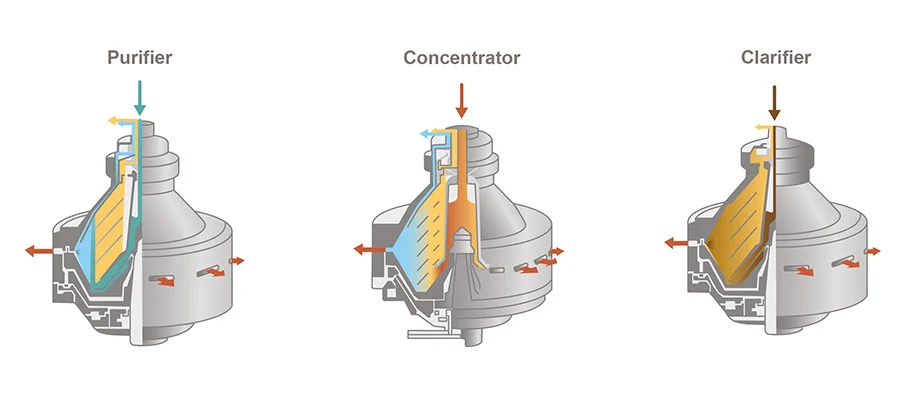
The demand for efficient, high-speed separation in industries such as food and beverage, pharmaceuticals, chemicals, and oil and gas has driven significant technological advancements in disc bowl centrifuge systems. These machines are designed to separate liquids and solids or immiscible liquids with high precision, and recent innovations have enhanced their performance, energy efficiency, automation, and durability. Understanding the latest developments in disc bowl centrifuge technology can help industries optimize production, reduce operational costs, and achieve consistent product quality.
Enhanced Separation Efficiency
One of the primary technological improvements in disc bowl centrifuges is the optimization of the bowl and disc geometry. Modern designs increase the effective settling area while minimizing residence time, allowing finer particles and emulsions to be separated more efficiently. Innovations in computational fluid dynamics (CFD) modeling enable engineers to predict flow patterns and optimize disc spacing and angles for maximum separation efficiency. Industries seeking high-purity outputs, such as edible oils, juices, and chemical solutions, can achieve superior results with these advanced centrifuge designs. A Disc Bowl Centrifuge now delivers faster clarification with minimal residual solids, enhancing both throughput and product quality.
Automation and Smart Control Systems
Automation has revolutionized the operation of disc bowl centrifuges. Modern systems are equipped with programmable logic controllers (PLCs) and real-time sensors that monitor critical parameters, including feed rate, rotational speed, vibration, temperature, and torque. Automated adjustments ensure that the centrifuge maintains optimal separation performance under varying operational conditions. Predictive maintenance features alert operators to potential wear or imbalance before it causes downtime, reducing unplanned maintenance and increasing overall efficiency. Smart control systems also allow remote monitoring, enabling operators to oversee multiple units and maintain consistent output quality across production lines.
Energy Efficiency Innovations
Energy consumption is a major consideration in industrial separation processes, and technological advancements have made disc bowl centrifuges more energy-efficient than ever. Variable frequency drives (VFDs) allow precise control of motor speed based on feed characteristics, reducing unnecessary power use. High-performance motors, optimized rotor designs, and lightweight materials further minimize energy consumption while maintaining high separation efficiency. Energy-efficient centrifuges also reduce heat generation, which is particularly beneficial when processing temperature-sensitive materials such as dairy products, juices, or chemicals that can degrade under excessive heat.
Improved Solids Discharge Mechanisms
Modern disc bowl centrifuges feature advanced solids discharge systems that enhance operational reliability and reduce manual intervention. Innovations include continuous or semi-continuous discharge mechanisms, which automatically remove accumulated solids from the bowl without stopping the machine. This continuous operation minimizes downtime, maintains high throughput, and reduces labor costs. Some systems also incorporate self-cleaning features, which prevent buildup and contamination, ensuring that the centrifuge operates consistently over long production cycles.
Materials and Durability Enhancements
Technological advancements in materials science have improved the durability and longevity of disc bowl centrifuges. High-strength stainless steels, corrosion-resistant alloys, and wear-resistant coatings are now commonly used in critical components such as the bowl, discs, and bearings. These materials can withstand abrasive feed materials, corrosive liquids, and high rotational speeds, extending service life and reducing maintenance requirements. Enhanced durability ensures reliable operation in demanding industrial environments, including chemical processing, wastewater treatment, and oil refining.
Integration with Industrial Processes
Another significant advancement is the integration of disc bowl centrifuges with broader industrial process systems. Modern centrifuges can be synchronized with upstream and downstream equipment, such as pumps, heat exchangers, and filtration units, for streamlined operation. This integration allows real-time adjustment of feed rates and separation parameters, improving overall process efficiency and product consistency. Industries benefit from reduced bottlenecks, improved resource utilization, and minimized waste.
Versatility and Application Expansion
Technological improvements have expanded the range of applications for disc bowl centrifuges. They are now capable of handling diverse feed types, including high-viscosity liquids, emulsions, and fine suspensions, making them suitable for multiple sectors. In the pharmaceutical industry, they support precise purification and solvent recovery. In food processing, they clarify beverages, oils, and dairy products efficiently. Chemical industries use advanced centrifuges for separating emulsions, recovering solvents, and purifying reaction mixtures. This versatility allows industries to rely on a single centrifuge design for multiple separation challenges, reducing equipment costs and complexity.
Conclusion
Technological advancements in disc bowl centrifuge systems have significantly enhanced their performance, efficiency, and versatility. Optimized designs, automation, energy-saving technologies, advanced materials, and improved discharge mechanisms allow these machines to deliver high-speed, precise separation with minimal downtime. Integration with industrial processes and the ability to handle diverse feed materials further extend their applicability across multiple sectors, including food, chemical, pharmaceutical, and oil and gas industries. By adopting modern disc bowl centrifuge systems, industries can achieve consistent product quality, operational efficiency, and long-term reliability, making these machines a vital component of advanced industrial separation processes.