



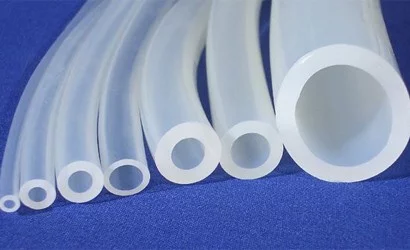
Silicone tubing is widely used in industries such as medical devices, pharmaceuticals, food processing, biotechnology, automotive systems, and industrial engineering. One of the key reasons for its popularity is its adaptability. Unlike many standard industrial materials, silicone tubing can be customized to meet highly specific application needs. This flexibility allows businesses to optimize performance, safety, and efficiency across different operating environments.
As industries become more specialized, the demand for tailored solutions continues to grow. Companies no longer rely on one-size-fits-all products; instead, they require tubing that matches exact technical, chemical, and physical requirements. Many organizations explore established Silicone Tubing Suppliers to understand how customization options can be applied to their unique operational needs. These suppliers play a critical role in bridging the gap between standard manufacturing and specialized industrial demand.
Understanding Custom Requirements in Silicone Tubing
Custom requirements refer to any specifications that go beyond standard tubing dimensions or materials. These may include unique sizes, specific wall thicknesses, specialized chemical resistance, color coding, or enhanced mechanical properties.
Different industries have different needs. For example, medical applications may require biocompatibility and sterilization resistance, while industrial systems may prioritize high-pressure tolerance or chemical resistance. Silicone tubing suppliers work closely with clients to understand these requirements and develop tailored solutions that meet exact performance expectations.
Material Selection and Formulation Flexibility
One of the most important ways silicone tubing suppliers support customization is through material selection. Silicone can be formulated in various grades, including medical-grade, food-grade, and industrial-grade compounds.
Each formulation offers different properties. Medical-grade silicone is designed for safety and biocompatibility, while industrial-grade silicone is optimized for durability and chemical resistance. Suppliers can also modify formulations to improve characteristics such as flexibility, temperature resistance, or transparency. This flexibility ensures that tubing performs effectively in its intended environment.
Dimensional Customization and Precision Engineering
Another key aspect of customization is dimensional control. Silicone tubing suppliers can produce tubing with highly specific inner diameters, outer diameters, and wall thicknesses.
Precision engineering is essential in applications such as medical devices or laboratory equipment, where even minor variations can affect performance. Advanced extrusion technology allows suppliers to maintain tight tolerances and ensure consistent product quality across large production batches. This level of precision is critical for industries that require exact fitting and reliable fluid flow.
Color Coding and Identification Features
Customization is not limited to physical dimensions and materials. Many industries require color-coded tubing for identification, safety, or operational efficiency. Silicone tubing suppliers offer a wide range of color customization options to help businesses organize systems and reduce operational errors.
For example, in medical environments, color-coded tubing can help differentiate between different fluid lines. In industrial systems, it can improve maintenance efficiency by making it easier to identify specific functions within complex machinery.
Reinforcement and Performance Enhancements
Some applications require silicone tubing with enhanced strength or durability. Suppliers can incorporate reinforcement materials such as polyester or wire mesh to improve pressure resistance and structural integrity.
These enhancements are particularly useful in high-pressure systems, vacuum applications, or environments with mechanical stress. By customizing reinforcement levels, suppliers ensure that tubing can withstand demanding operational conditions without failure.
Chemical and Temperature Resistance Customization
Different industries expose silicone tubing to a wide range of chemicals and temperatures. Suppliers can adjust material formulations to improve resistance to acids, solvents, oils, and extreme temperatures.
For high-temperature applications, silicone tubing can be designed to maintain flexibility and strength even under continuous heat exposure. Similarly, chemical-resistant formulations help prevent degradation in harsh industrial environments. This level of customization ensures long-term durability and reliable performance.
Prototyping and Product Development Support
Silicone tubing suppliers often provide prototyping services to support custom requirements. This allows businesses to test different designs, materials, and configurations before full-scale production begins.
Prototyping helps identify potential issues early in the development process and ensures that the final product meets performance expectations. Suppliers work closely with clients during this stage to refine specifications and optimize design efficiency.
Compliance with Industry Standards
Even when products are customized, they must still meet relevant industry standards. Silicone tubing suppliers ensure that custom products comply with certifications such as ISO, FDA, USP Class VI, and other regulatory requirements.
This ensures that customized tubing remains safe and suitable for use in regulated industries such as healthcare and food processing. Compliance also helps businesses avoid legal and operational risks.
Scalable Production for Custom Orders
One of the challenges of customization is maintaining consistency at scale. Reliable silicone tubing suppliers use advanced manufacturing systems that allow them to scale custom designs from prototypes to full production runs without compromising quality.
This ensures that businesses can grow without needing to redesign or switch suppliers. Scalable production also helps maintain cost efficiency while meeting increasing demand.
Conclusion
Silicone tubing suppliers play a vital role in supporting custom requirements across multiple industries. Through material selection, dimensional precision, reinforcement options, color coding, and performance enhancements, they provide tailored solutions that meet specific operational needs.
By combining technical expertise with advanced manufacturing capabilities, these suppliers enable businesses to achieve higher efficiency, improved safety, and better product performance. Customization is no longer an added advantage; it has become a standard expectation in modern industrial applications.