



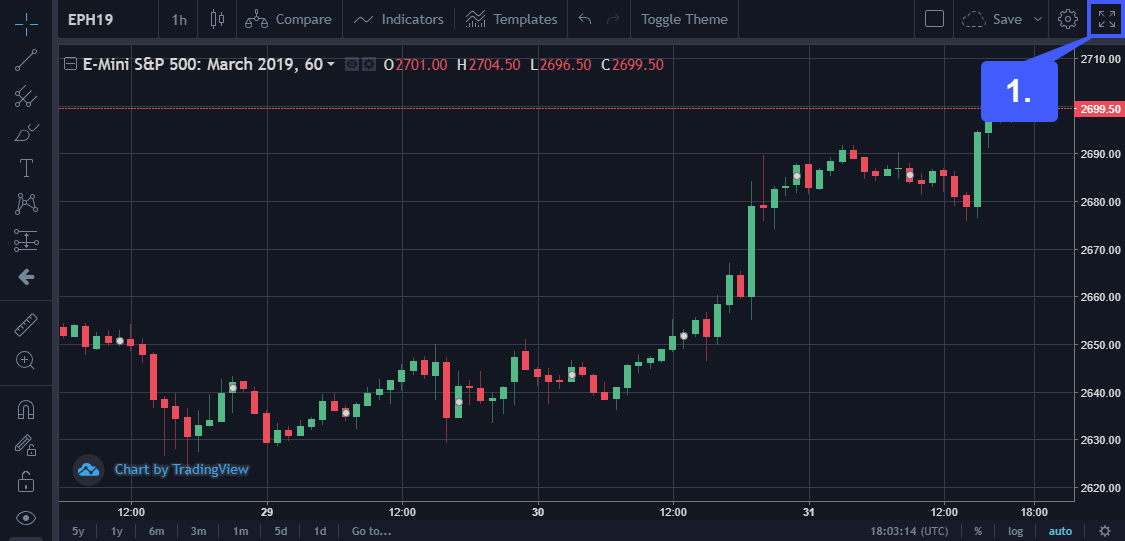
Sentiment analysis is also a tool that traders use when they want to have an in-depth insight into the market dynamics. The TradingView charts are a rich system of price movement and indicator visualization that enable the trader to make more informed decisions and position themselves with regard to the current psychology in the markets. Traders can determine whether the market participants are being bullish or bearish by observing trends like candlestick formations, volume spikes, or the direction of the trends.
The chart-based sentiment analysis presupposes observing the reaction of the price at significant levels of support and resistance. Whenever price is seen to follow these levels; it is an indicator that the traders are highly convinced to either buy or sell. These areas can be added to TradingView charts and this enables traders to locate possible reversal or breakout levels. With a graphical display of the behavior, traders can include the sentiment-based behavior in their risk management schemes.
The indicators can be used to supplement sentiment analysis. The Relative Strength Index, MACD, and volume oscillators are indicators that can be used to denote the state of being overbought or oversold and indicate the likelihood of a change of heart. By overlaying these indicators onto TradingView charts, traders have the opportunity to use objective data with the price patterns they observe, increasing confidence in their market analysis. Such a two-fold strategy helps to better predict continuation or reversal of trends.
Another advantage of sentiment monitoring that traders have is the ability to track several time frames. A short-term chart may indicate a temporary optimistic bullish trend, whereas a long-term chart will indicate long-term market sentiment. When traders compare these views with the help of TradingView charts, they can tell the difference between short-term sentiment and long-term market belief. This timeframe strategy minimizes chances of taking action on false signals and enhances better timing of trades.
Sentiment tracking is also supplemented with volume and open interest data. Surges in trading volume can be good indicators of a strong response to news or economic events, reflecting the collective sentiment of traders. By indicating such changes on the TradingView charts, traders will be in a better position to understand the strength of market responses and predict possible price changes. Such a visual background supports more disciplined entry and exit decisions with respect to market psychology.
Sentiment may also be severely influenced by economic news releases as well as geopolitical happenings. TradingView charts help traders to monitor price response directly on the heels of big announcements, as compared to how the market had previously behaved. These reactions can be documented graphically to assist in establishing a historical base of responses in the market so that traders can better their approach to future occurrences of the same. This proactive approach can minimize surprises and promote the enhancement of risk management.
TradingView alerts can be used to make sure that traders are aware of key changes in sentiment in real time. The traders will be capable of responding more quickly to changes in the market mood through the creation of the alert regarding any changes in the price in relation to the key levels or thresholds. It is a combination of visual tracking and automated alerts and it does not require constant attention, and it enables traders to use high-probability opportunities. Alerts may also have more than one-parameters such as volume spikes and price approaching resistance which gives a finer picture of the market.
A disciplined and informed trading approach is cultivated by continuously incorporating sentiment analysis into trading habits. Traders are able to better understand market participants’ behavior by combining visual observation, technical indicators, multi-timeframe assessment, and alerts on TradingView charts. This approach will improve the execution of the strategy and risk management, which enables traders to operate effectively in volatile markets. With time, the habit of using sentiment tracking enhances decision-making, allowing traders to predict any possible movement in the market before trends fully develop.