



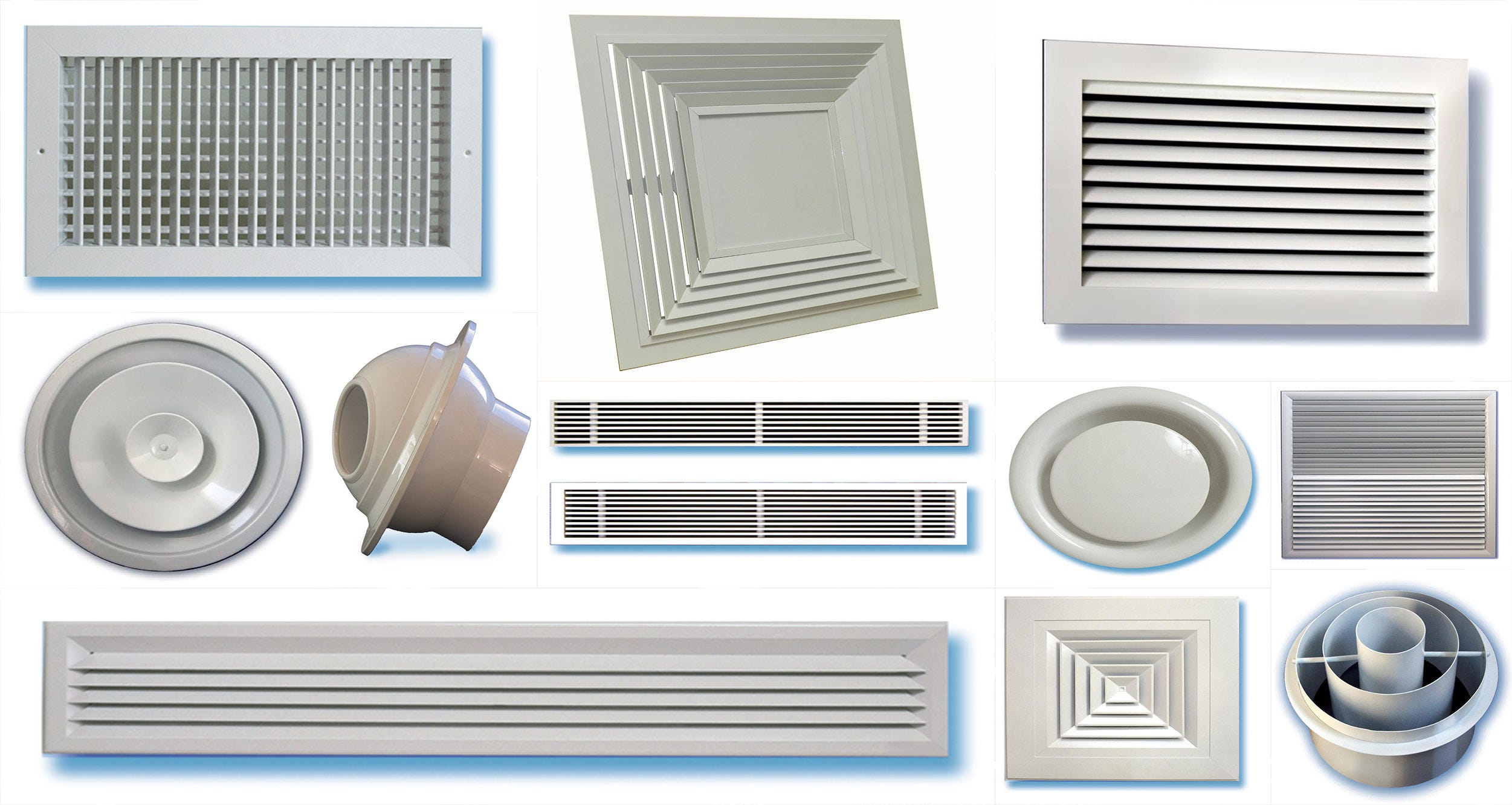
Air distribution is a critical part of HVAC system performance, and diffusers play a central role in ensuring conditioned air is delivered evenly throughout a space. Among the most commonly used types are square and round diffusers, each offering distinct advantages depending on design requirements, airflow needs, and architectural constraints.
A square ceiling diffuser is widely used in modern HVAC systems due to its balanced airflow distribution and compatibility with standard ceiling grids. A square ceiling diffuser is often preferred in commercial and residential applications where uniform air dispersion and clean ceiling integration are important.
Overview of Square and Round Diffusers
Both square and round diffusers serve the same fundamental purpose—distributing air from HVAC systems into occupied spaces. However, their design, airflow behavior, and installation suitability differ significantly.
Square diffusers are typically integrated into modular ceiling systems, while round diffusers are often used in exposed or decorative installations where aesthetics or directional airflow is prioritized.
Design Differences
Square Ceiling Diffusers
Square diffusers feature a symmetrical, grid-based design that allows air to be distributed evenly in multiple directions. This makes them highly effective for achieving uniform coverage in rectangular or square rooms.
Their structured appearance also blends seamlessly with modern suspended ceiling systems.
Round Diffusers
Round diffusers have a circular design that disperses air in a radial pattern. They are often used in spaces where ceiling aesthetics or specific airflow direction is more important than uniform distribution.
Airflow Distribution Performance
One of the most important differences between the two types is how they distribute air.
Square Diffusers
- Provide multi-directional airflow
- Ensure balanced temperature distribution
- Reduce hot and cold spots
- Suitable for large open areas
Their evenly distributed airflow makes them ideal for maintaining consistent indoor comfort.
Round Diffusers
- Deliver circular airflow patterns
- Often create more directional air movement
- Suitable for smaller or specialized zones
- May require careful placement for uniform coverage
Installation and Ceiling Compatibility
Square Ceiling Diffusers
Square diffusers are designed to fit standard ceiling grid systems, making installation straightforward in commercial buildings. They align well with modular ceiling tiles, allowing for clean integration and easy replacement.
Round Diffusers
Round diffusers require cut-out ceiling openings and are often installed in drywall or exposed ceiling designs. While they offer flexibility in placement, they may not integrate as seamlessly with grid ceilings.
Efficiency and HVAC Performance
Efficiency plays a key role in diffuser selection, especially in energy-conscious building designs.
Square Diffusers
Square diffusers are highly efficient in maintaining balanced airflow. Their multi-directional design helps reduce system strain and improves overall HVAC efficiency by ensuring even air distribution.
Round Diffusers
Round diffusers can be efficient in targeted airflow applications but may not provide the same level of uniform distribution in larger spaces.
Aesthetic Considerations
Square Ceiling Diffusers
- Clean, modern appearance
- Blend well with ceiling tiles
- Suitable for professional environments like offices and hotels
Round Diffusers
- More decorative appearance
- Often used in visible or exposed ceilings
- Suitable for architectural or design-focused spaces
Applications in Different Spaces
Square Ceiling Diffusers
Commonly used in:
- Office buildings
- Shopping malls
- Hospitals
- Schools
- Residential apartments
Their balanced airflow makes them ideal for large, open-plan environments.
Round Diffusers
Commonly used in:
- Small offices
- Residential rooms
- Decorative ceiling designs
- Zoned airflow systems
Maintenance and Durability
Both diffuser types require minimal maintenance, but material quality plays a significant role in longevity.
Square diffusers, often made from aluminum or steel, are durable and resistant to corrosion. Round diffusers also offer durability but may vary more in material depending on design and application.
Regular cleaning ensures optimal airflow and prevents dust buildup in both types.
Conclusion
Choosing between square and round diffusers depends on airflow requirements, ceiling design, and application type. Square diffusers excel in providing uniform air distribution and seamless integration with modern ceiling systems, while round diffusers are better suited for directional airflow and decorative installations.
For most commercial and residential HVAC systems, a square ceiling diffuser offers superior balance, efficiency, and versatility. Understanding these differences helps ensure better HVAC performance, improved comfort, and optimized energy use.