



In modern metal processing industries, the design of production facilities plays a critical role in determining efficiency, safety, and long-term operational stability. Continuous surface treatment systems used for steel and aluminum require carefully planned layouts and engineering decisions to ensure smooth production flow and consistent product quality.
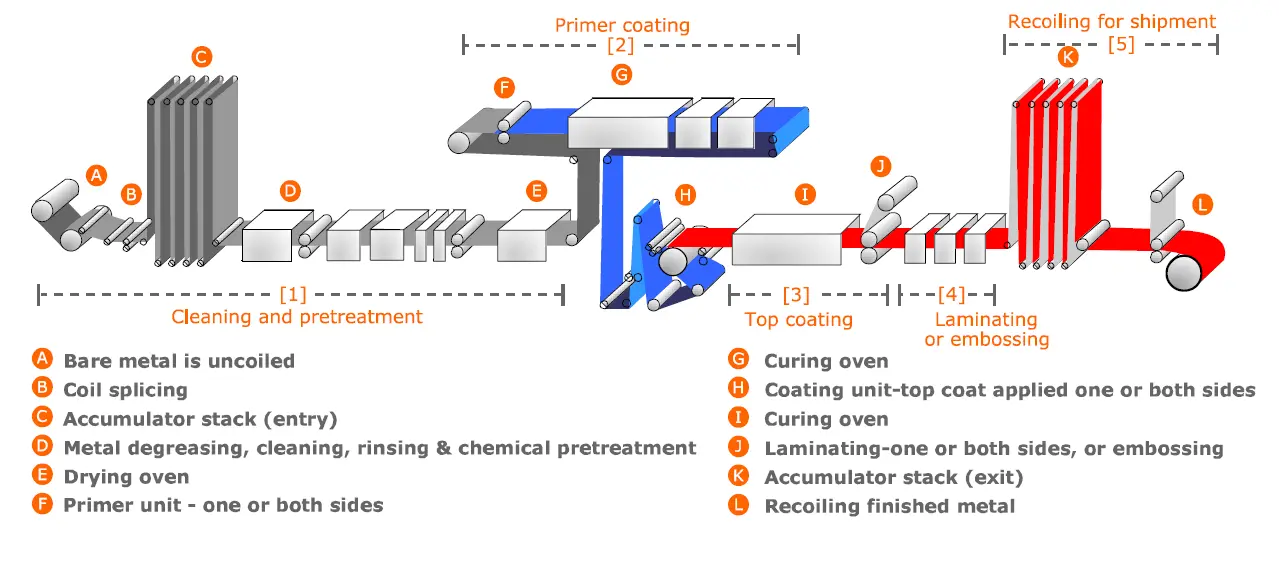
A modern colour coating line is a highly integrated system that combines multiple processing stages such as cleaning, pretreatment, coating, curing, and recoiling. Because each stage is interdependent, proper plant design is essential to maintain stable operation, reduce downtime, and optimize production capacity in industrial environments.
Importance of Proper Plant Design
Designing a coating facility is not only about placing machines in sequence. It requires a systematic approach that considers material flow, safety, energy efficiency, and maintenance accessibility.
A well-designed plant helps achieve:
- Smooth and continuous production flow
- Reduced material handling and transfer time
- Improved operational safety for workers
- Better energy utilization across processes
- Easier maintenance and system accessibility
These factors directly influence long-term productivity and cost efficiency.
Layout Planning and Material Flow
One of the most important considerations in plant design is the layout of the production line. A linear and uninterrupted flow is essential for continuous coating operations.
Key layout principles include:
- Aligning equipment in logical process sequence
- Minimizing coil movement between stages
- Ensuring sufficient space between units for safety and maintenance
- Designing clear pathways for operators and material handling
Proper layout reduces bottlenecks and ensures stable production performance.
Entry and Exit Section Design
The entry and exit sections of a colour coating line are critical for smooth coil handling. These areas must be designed to ensure stable feeding and recoiling of steel or aluminum coils.
Design considerations include:
- Coil loading systems with safe lifting mechanisms
- Tension control devices for stable feeding
- Alignment systems to prevent edge damage
- Efficient recoiling units for finished products
Poor design in these sections can lead to material damage and production instability.
Pretreatment Zone Requirements
The pretreatment section requires careful planning due to the use of chemicals and water-based processes. This area must be designed with safety and environmental control in mind.
Key requirements include:
- Corrosion-resistant equipment and pipelines
- Proper drainage and wastewater treatment systems
- Adequate ventilation for chemical handling
- Separation from heat-sensitive zones
A well-designed pretreatment zone ensures consistent surface preparation and compliance with environmental regulations.
Coating and Curing Area Design
The coating and curing sections are the core of the production line and require precise environmental and structural control.
Important design factors include:
- Clean and dust-free coating environment
- Stable temperature control for coating application
- Proper insulation and ventilation in curing ovens
- Sufficient space for maintenance and inspection
These conditions ensure uniform coating quality and reliable curing performance.
Energy Efficiency and Thermal Management
Energy consumption is a major consideration in industrial coating plants, especially in curing ovens that require high temperatures.
Design strategies for energy efficiency include:
- Heat recovery systems to reuse exhaust heat
- High-quality insulation materials for ovens
- Optimized airflow and temperature zoning
- Efficient burner and heating system design
These measures reduce operational costs while maintaining stable production quality.
Automation and Control System Integration
Modern coating plants rely heavily on automation systems for monitoring and controlling production parameters. Design must include space and infrastructure for control systems.
Key automation elements include:
- Centralized PLC control systems
- Real-time monitoring sensors
- Human-machine interface (HMI) stations
- Safety interlock and emergency shutdown systems
Proper integration ensures smooth coordination between all production stages.
Maintenance Accessibility and Safety Design
Maintenance accessibility is essential for long-term operational reliability. Equipment must be arranged to allow easy inspection and repair without disrupting production.
Safety considerations include:
- Adequate spacing between machinery
- Safe access platforms and walkways
- Emergency exits and ventilation systems
- Fire safety and hazard control measures
These elements help ensure safe and efficient plant operation.
Conclusion
Designing an industrial coating facility requires careful planning of layout, equipment arrangement, energy systems, and safety features. Every section of the production line must be optimized to support continuous and stable operation. A well-engineered colour coating line not only improves production efficiency but also ensures long-term reliability, safety, and product quality, making it a key component in modern metal processing plants.