



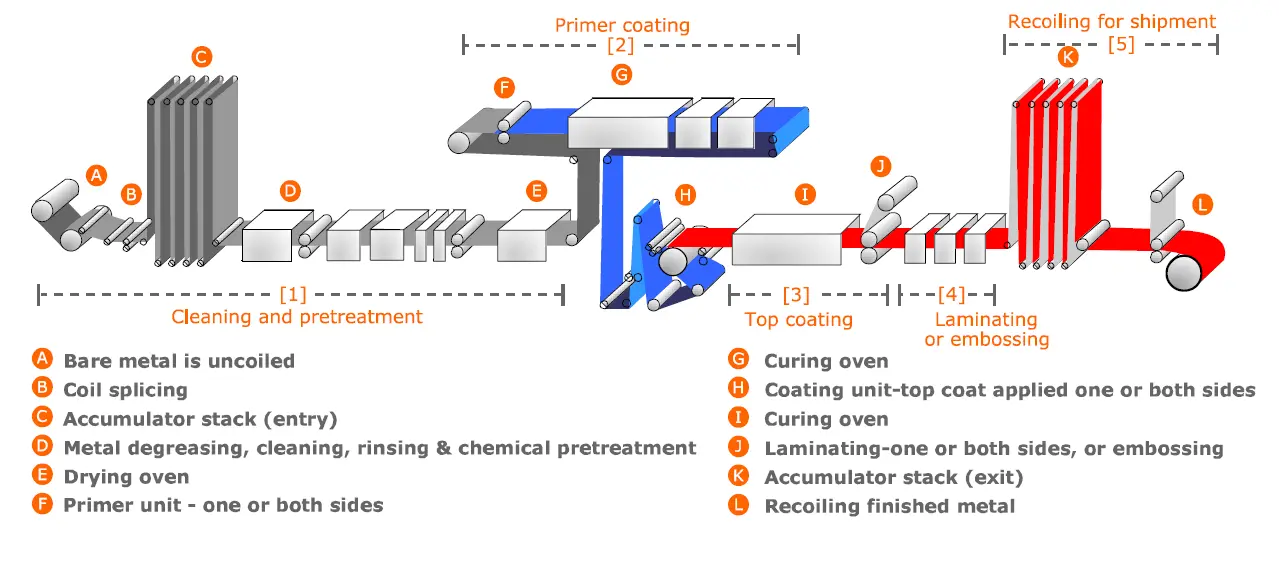
In continuous metal processing industries, maintaining stable mechanical conditions is essential for achieving consistent product quality. Among these conditions, strip tension control plays a particularly important role in ensuring smooth material flow, precise coating application, and defect-free surface finishing. Without proper tension regulation, even advanced coating systems can produce uneven or damaged results.
A modern aluminum coil coating line relies heavily on sophisticated tension control systems to manage the movement of aluminum strips throughout the entire production process. These systems ensure that the material remains stable as it passes through cleaning, coating, curing, and recoiling stages.
Why Tension Control Is Critical in Coil Coating
Aluminum coils are thin and flexible, making them highly sensitive to mechanical stress. If tension is too high, the strip may stretch or deform. If it is too low, the material may wrinkle or misalign.
Proper tension control ensures:
- Smooth and stable strip movement
- Accurate coating application
- Prevention of wrinkles and edge waves
- Consistent coating thickness and surface quality
This balance is essential for maintaining high-quality continuous production.
Basic Principles of Strip Tension Control
Tension control systems work by regulating the force applied to the aluminum strip as it moves through different sections of the line. This force must be carefully adjusted based on speed, material thickness, and process requirements.
The system typically operates using:
- Sensors that measure real-time tension levels
- Controllers that analyze and adjust parameters
- Drive systems that regulate motor speed and torque
These components work together to maintain stable material flow.
Types of Tension Control Systems
Different coil coating lines may use different types of tension control systems depending on production requirements and automation level.
Open-Loop Control Systems
Open-loop systems operate based on preset values without real-time feedback. While simpler, they are less precise and suitable for basic applications.
Closed-Loop Control Systems
Closed-loop systems use real-time sensor feedback to continuously adjust tension levels. This provides higher accuracy and stability, especially in high-speed production environments.
Dancer Roll Systems
Dancer rolls physically respond to tension changes in the strip. They help absorb fluctuations and maintain consistent movement through mechanical adjustment.
Entry and Exit Section Tension Management
Tension control is applied at both the entry and exit sections of the coil coating line. Each section plays a distinct role in maintaining system stability.
Entry Section
At the entry side, tension must be carefully controlled during coil unwinding to prevent sudden jerks or slack in the strip.
Exit Section
At the exit side, tension ensures smooth recoiling of the coated strip without causing deformation or surface damage.
Balanced control between both ends is essential for stable operation.
Role of Accumulators in Tension Stability
Strip accumulators are used to store temporary lengths of aluminum strip, allowing the system to maintain continuous operation during coil changes. They also help stabilize tension fluctuations.
Key benefits include:
- Smooth transition between coils
- Reduced tension variation during loading
- Continuous production without interruption
- Improved overall process stability
Accumulators act as a buffer between different stages of the process.
Influence of Tension on Coating Quality
Improper tension can directly affect coating performance. Even small variations can lead to visible defects or structural weaknesses in the coating layer.
Tension-related issues may cause:
- Uneven coating thickness
- Edge cracking or wrinkling
- Poor adhesion in certain areas
- Surface defects after curing
Maintaining stable tension is therefore essential for consistent quality output.
Integration with Automation Systems
Modern tension control systems are fully integrated into automated coil coating lines. This allows centralized control of all mechanical and process parameters.
Automation provides:
- Real-time tension monitoring
- Automatic adjustment of drive systems
- Synchronization with coating and curing units
- Reduced operator intervention
This integration improves both accuracy and efficiency.
Sensor Technology in Tension Control
Advanced sensor technology is at the core of modern tension control systems. These sensors provide continuous feedback on strip behavior.
Common sensor types include:
- Load cells for direct force measurement
- Position sensors for dancer roll systems
- Optical sensors for strip alignment
- Speed sensors for synchronization
Accurate sensing ensures stable and responsive control.
Maintenance of Tension Control Systems
Regular maintenance is essential to ensure long-term accuracy and reliability of tension control systems. Any malfunction can lead to production instability.
Maintenance practices include:
- Calibration of sensors and load cells
- Inspection of rollers and mechanical components
- Software updates for control systems
- Lubrication and alignment checks
Proper maintenance reduces downtime and improves system lifespan.
Importance in a Modern Aluminum Coil Coating Line
Tension control is a core function within a modern aluminum coil coating line. It ensures that the aluminum strip moves smoothly through all processing stages without deformation or instability.
Integrated benefits include:
- Stable coating application conditions
- Reduced material waste and defects
- Higher production speed capability
- Improved overall system efficiency
Without precise tension control, achieving high-quality continuous production would not be possible.
Conclusion
Tension control systems are essential for maintaining stability, precision, and quality in aluminum coil coating operations. By regulating strip movement throughout the entire production line, these systems prevent defects and ensure consistent coating performance.
In a modern aluminum coil coating line, advanced sensors, automation, and closed-loop control technologies work together to maintain optimal tension conditions. As industrial demand continues to grow, further advancements in intelligent control systems will continue to enhance efficiency, reliability, and product quality in coil coating manufacturing.