



Modern imaging technology has advanced rapidly in recent years, driven by the demand for sharper images, reduced motion blur, and improved low-light performance. As cameras become smaller and more powerful, especially in smartphones and compact devices, the need for highly responsive stabilization systems has become essential.
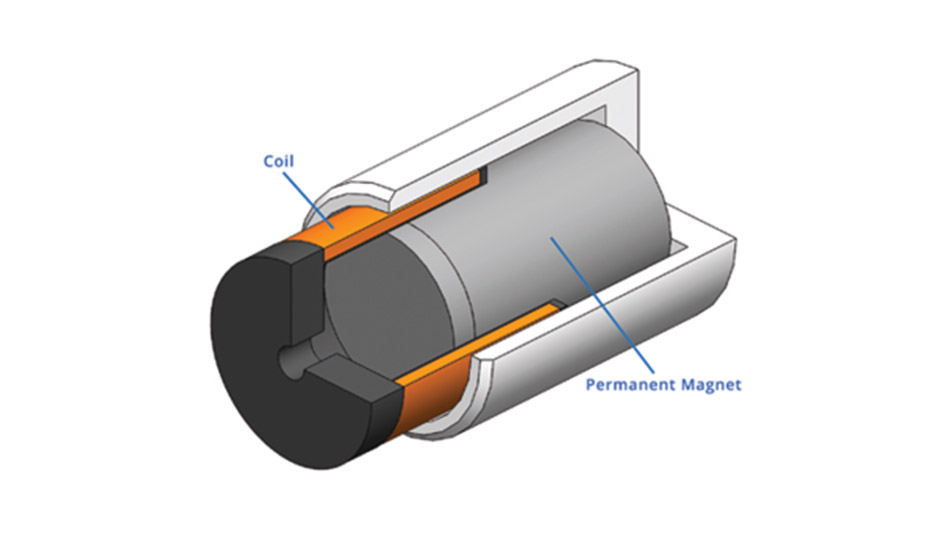
A voice coil motor is a direct-drive electromagnetic device that generates precise linear motion through the interaction of a magnetic field and a current-carrying coil. Because it offers fast response, smooth movement, and high positioning accuracy, it is widely used in optical systems. Understanding how a voice coil actuator functions helps explain why it is a key component in optical image stabilization technologies.
Importance of Image Stabilization in Modern Optics
Optical image stabilization (OIS) is designed to reduce the effects of unwanted camera movement during image capture. Even small vibrations caused by hand movement can result in blurry or distorted images, especially at high zoom levels or long exposure times.
OIS systems aim to:
- Compensate for hand shake in real time
- Improve image sharpness in low-light conditions
- Enhance video stability during motion
- Support high-resolution imaging performance
Voice coil motors play a central role in achieving these goals due to their speed and precision.
How Voice Coil Motors Enable Optical Image Stabilization
In OIS systems, voice coil motors are used to move optical components such as lenses or image sensors in response to detected motion. When a device detects vibration, the motor quickly adjusts the position of the optical element in the opposite direction to counteract the movement.
This process involves:
- Motion sensors detecting shake or vibration
- A control system calculating correction signals
- The voice coil motor executing rapid positional adjustments
- Continuous feedback for real-time stabilization
Because the system responds in milliseconds, it effectively neutralizes motion blur before it affects image quality.
Advantages of Voice Coil Motors in OIS Systems
Voice coil motors offer several advantages that make them ideal for optical stabilization applications.
Fast Response Time
One of the most critical requirements in OIS systems is speed. Voice coil motors respond almost instantly to electrical signals, allowing real-time correction of camera movement.
Smooth and Vibration-Free Motion
Since there are no gears or mechanical contact components, the motion is extremely smooth. This ensures stable lens or sensor movement without introducing additional vibration.
High Precision Control
Voice coil motors enable micron-level positioning accuracy, which is essential for fine optical adjustments. This precision directly impacts image clarity and sharpness.
Compact Design
Modern imaging devices, especially smartphones, require extremely small components. Voice coil motors are compact and lightweight, making them easy to integrate into tight spaces.
Types of Optical Stabilization Using Voice Coil Motors
Voice coil motors are used in different types of stabilization systems depending on design requirements.
Lens-Based Stabilization
In lens-based OIS, the motor shifts optical lenses to compensate for movement. This is commonly used in smartphones and DSLR cameras.
Sensor-Based Stabilization
In this approach, the image sensor itself is moved instead of the lens. This method is often used in advanced imaging systems for improved stabilization performance.
Hybrid Stabilization Systems
Some modern devices combine both lens and sensor movement for enhanced stabilization accuracy and broader motion compensation.
Control Systems in Optical Stabilization
Effective image stabilization depends not only on the motor but also on the control system that drives it. High-speed feedback loops are used to ensure accurate and responsive movement.
Key components include:
- Gyroscopes and motion sensors
- Real-time processing units
- Feedback control algorithms
- Precision driver circuits
The voice coil motor acts as the final actuator that executes these control signals with high accuracy.
Applications in Consumer and Professional Devices
Voice coil motors are widely used across various imaging systems, including:
- Smartphone cameras
- Professional DSLR and mirrorless cameras
- Drone imaging systems
- Security and surveillance cameras
- Medical imaging equipment
Their versatility and performance make them suitable for both consumer and industrial applications.
Challenges and Design Considerations
While voice coil motors offer excellent performance, engineers must address several design challenges:
- Power consumption during continuous operation
- Heat generation in compact devices
- Space constraints in miniaturized systems
- Precision calibration for optimal performance
Proper system design ensures reliable and efficient stabilization performance.
Conclusion
Voice coil motors play a critical role in modern optical image stabilization systems by providing fast, precise, and smooth motion control. Their ability to respond instantly to vibration makes them ideal for improving image quality in cameras across consumer and professional applications.
As imaging technology continues to evolve, voice coil motors will remain a key enabling technology behind sharper, more stable, and higher-quality visual capture systems.